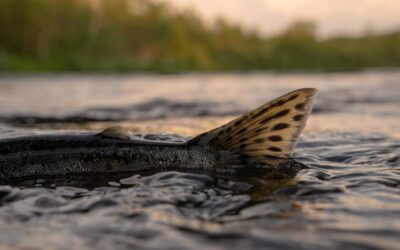
Hidden beneath the surface of the world’s rivers, some of Earth’s great animal movements unfold – migrations that rival, in sheer biomass, the famous mass movements of zebra and wildebeest across the Serengeti.
For centuries, fish migrations were as predictable as the seasons. Salmon, sturgeon, giant catfish and many other species moved through rivers in vast numbers, guided by rising water, flood pulses and evolved biological cues.
These species are extraordinarily diverse, ranging from beluga sturgeon – massive fish that can live for more than a century and produce the world’s most prized caviar – to giant river carp, tropical eels, gold-flecked shad and goliath catfish, all of which travel to survive, in some cases over hundreds or even thousands of miles.
Their journeys can span continents. But the fish and their migrations are disappearing.
For most migratory fish, movement is not optional; it is how they survive. When dams block routes, when fishing intensifies at migratory bottlenecks and when floodplains and spawning grounds are cut off or degraded, most migratory fish do not simply go somewhere else. They cannot. First the migration thins, then it falters. In some rivers, especially those blocked by dams, it disappears altogether.
A new global assessment I led for the March 2026 international meeting of parties to the Convention on the Conservation of Migratory Species of Wild Animals provides the clearest picture yet of this decline – and what’s needed to stop it.
My co-authors and I reviewed more than 15,000 species of freshwater fish, identified which of them migrate, and assessed their conservation status, or risk of extinction. We then focused on migratory species with declining populations and identified those where countries will have to work together to help them recover and thrive.
READ MORE: